Reimagining the future of food through embracing tradition and fostering innovation
Ling Zhi Cheong is a Professor in Food Science at the University of Melbourne. She is a certified Project Management Professional (PMP) and has vast experiences working and collaborating with food and agribusiness companies worldwide. Ling Chi will be accompanied by Cai Shen also from the University of Melbourne
Professor Cheong’s presentation outlines a strategic framework to address urgent global food challenges by merging ancestral culinary wisdom with cutting-edge scientific technology.
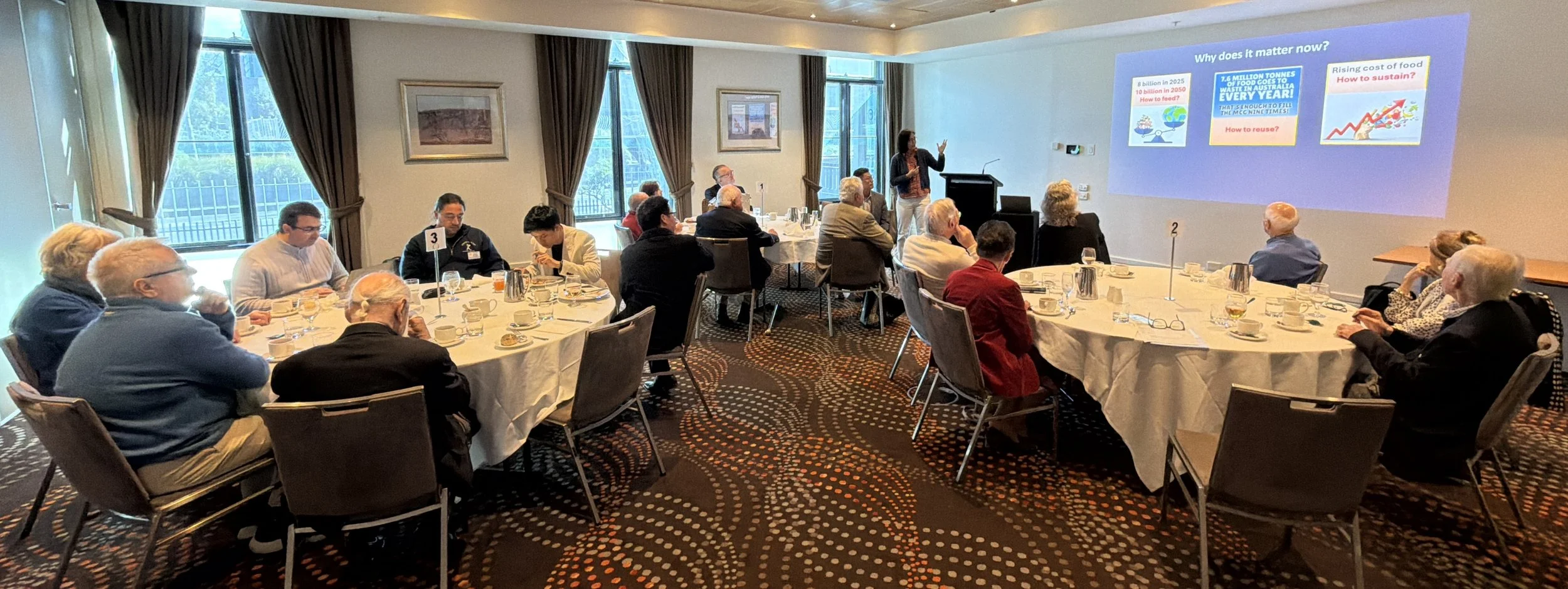
Core Challenges and Drivers
The presentation identifies three "present realities" that necessitate a food system overhaul:
1. Population Growth
Moving from 8 billion people in 2023 to an estimated 10 billion by 2050, raising the question of how to feed everyone.
2. Food Waste
In Australia alone, 7.6 million tonnes of food are wasted annually—enough to fill the MCG nine times—requiring new ways to reuse resources.
3. Sustainability and Cost
The rising cost of food demands sustainable production and equitable distribution and access.
The Three Pillars of Food Innovation
To build a food system that is productive, nutritious, resilient, and responsive, Professor Cheong proposes three strategic pillars.
1. Sustainable Ingredients (The Circular Bioeconomy)
Shifting from a linear "take-produce-consume-discard" model to a circular food bioeconomy. This involves using science and technology to transform waste streams into "wealth," such as converting dairy by-products into high-value proteins.
2. Smart Manufacturing
This pillar focuses on decoding traditional wisdom by identifying the specific nutrients, enzymes, and bioactive pathways in traditional foods and using machine learning and smart biomanufacturing to scale these discoveries efficiently and safely.
3. Food for Health & Enjoyment
Recognizing that food must both nourish the body and preserve cultural joy, this pillar uses tools like "Robogut" to validate health benefits. A key challenge identified is successfully incorporating bioactives into real food matrices while maintaining an enjoyable eating experience (texture, flavor release, and digestion).
Australia’s Unique Opportunity
Professor Cheong highlights Australia's competitive advantage, noting high-quality agricultural products and an opportunity to generate an additional $40 billion; to export value projected to reach $75 billion by 2026/2027.
Key Takeaway
Professor Cheong’s approach lies in a "One Future" vision where the "Grandmother’s Kitchen" and the "Modern Food Science Lab" work in tandem to produce sustainable, culturally resonant, and healthy food.